
Winter 2027: Essentials
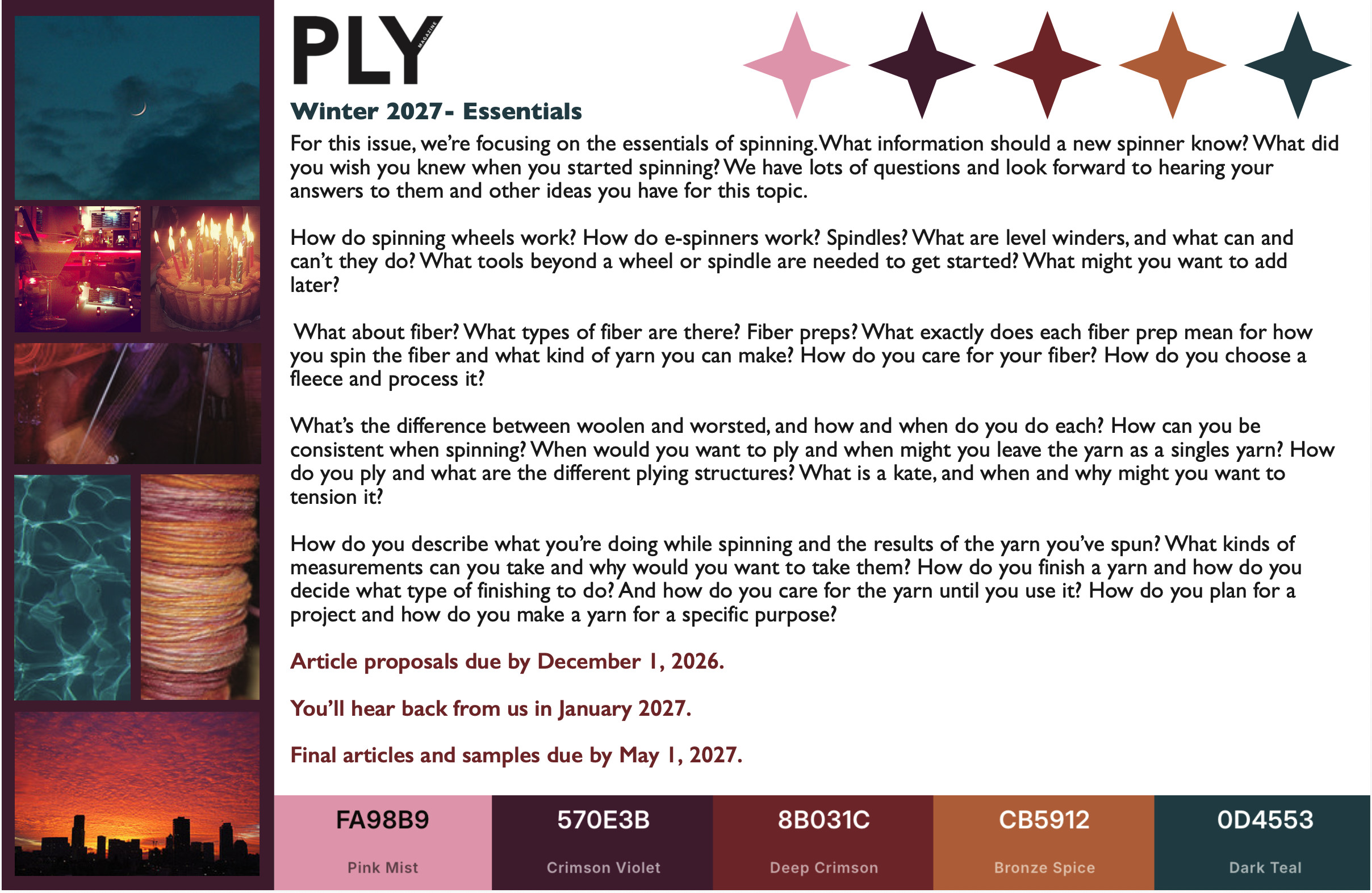
For this issue, we’re focusing on the essentials of spinning. What information should a new spinner know? What did you wish you knew when you started spinning? We have lots of questions and look forward to hearing your answers to them and other ideas you have for this topic.
How do spinning wheels work? How do e-spinners work? Spindles? What are level winders, and what can and can’t they do? What tools beyond a wheel or spindle are needed to get started? What might you want to add later?
What about fiber? What types of fiber are there? Fiber preps? What exactly does each fiber prep mean for how you spin the fiber and what kind of yarn you can make? How do you care for your fiber? How do you choose a fleece and process it?
What’s the difference between woolen and worsted, and how and when do you do each? How can you be consistent when spinning? When would you want to ply and when might you leave the yarn as a singles yarn? How do you ply and what are the different plying structures? What is a kate, and when and why might you want to tension it?
How do you describe what you’re doing while spinning and the results of the yarn you’ve spun? What kinds of measurements can you take and why would you want to take them? How do you finish a yarn and how do you decide what type of finishing to do? And how do you care for the yarn until you use it? How do you plan for a project and how do you make a yarn for a specific purpose?
Article proposals due by December 1, 2026.
You’ll hear back from us in January 2027.
Final articles and samples due by May 1, 2027.
—–
The last few mood boards are here:
Autumn 2027: Luxury
Summer 2027: Whorl
Spring 2027: Blends
Winter 2026: Short Draw
Contributor Guidelines
Find the Contributor Guidelines here (most recent update September 14, 2026)
No AI use policy
Do not use AI to generate any of the writing of your article. Do not use AI to do any editing of your article. If you’re worried about your writing, please don’t. Your article will be going through several rounds of different types of editing, which will help with the organization/flow and any mechanical errors.
Our most important goal is to have your article sound like you, which is what we strive for while we edit articles. Using AI for writing or editing removes your personal voice, which is a big part of what we want to see in your article.

