
Mixing Things up for a Sweater
words and photos by: Johanna Carter
I always admire those who are able to spin mountains of yarn for a big project, ready to knit a wonderful sweater or cardigan. It is a satisfying feeling when you finish all that work, especially if you started with washing and combing the wool or even raising your own sheep.
Mixing spinning and knitting
The typical way to work through a larger project is to spin all the singles first and ply them in a particular order so you get the yarn even throughout the whole project. I don’t have so many bobbins, but my bigger problem is that I am quite impatient and want to get on with knitting once I have an idea. And normally, my brain is full of ideas for fibre work and the limit is the time, as I am a musician and teacher. I can’t sit at the spinning wheel for a long time if I’m not on holiday, so during the school year I mostly knit, and during the holidays I can dye, spin, use my drum carder, and do lots of fibre work. The only time I was able to produce bigger quantities of yarn before I knitted them up was during the Tour de Fleece in the two years during the pandemic, when we did not go on holiday at the beginning of July.
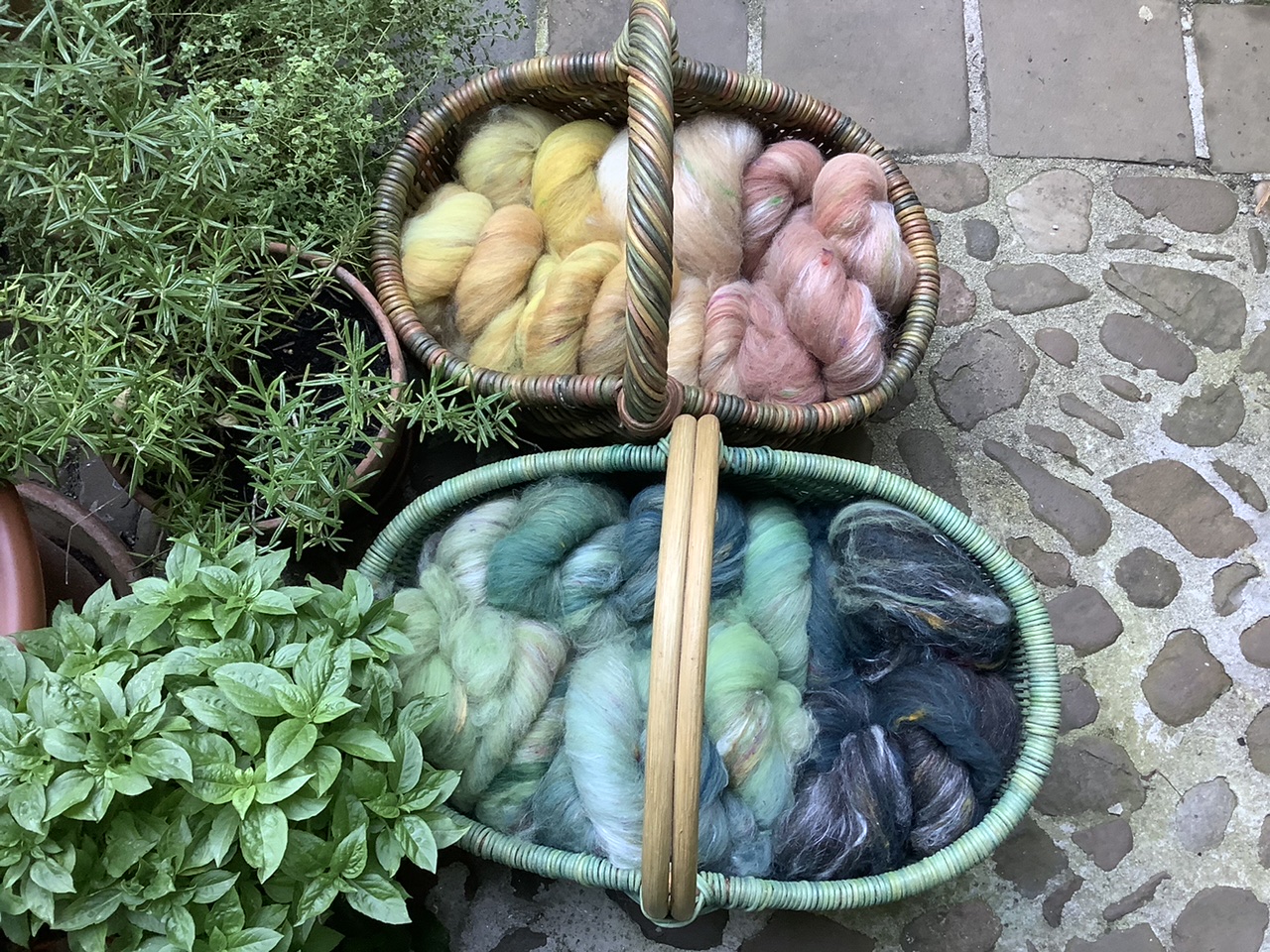
A highly photogenic collection of naturally dyed fibres.
I like to finish knitting one big project like a sweater or cardigan before I start the next one, or at least until I can’t carry it in my bag easily anymore, so I have an excuse to begin the next one. Sometimes it is good to have a second project on the go – I call it mindless knitting, where I don’t have to look very much – which I can keep my hands busy during Zoom or other meetings, which helps me listen.
Mixing colours and fibres
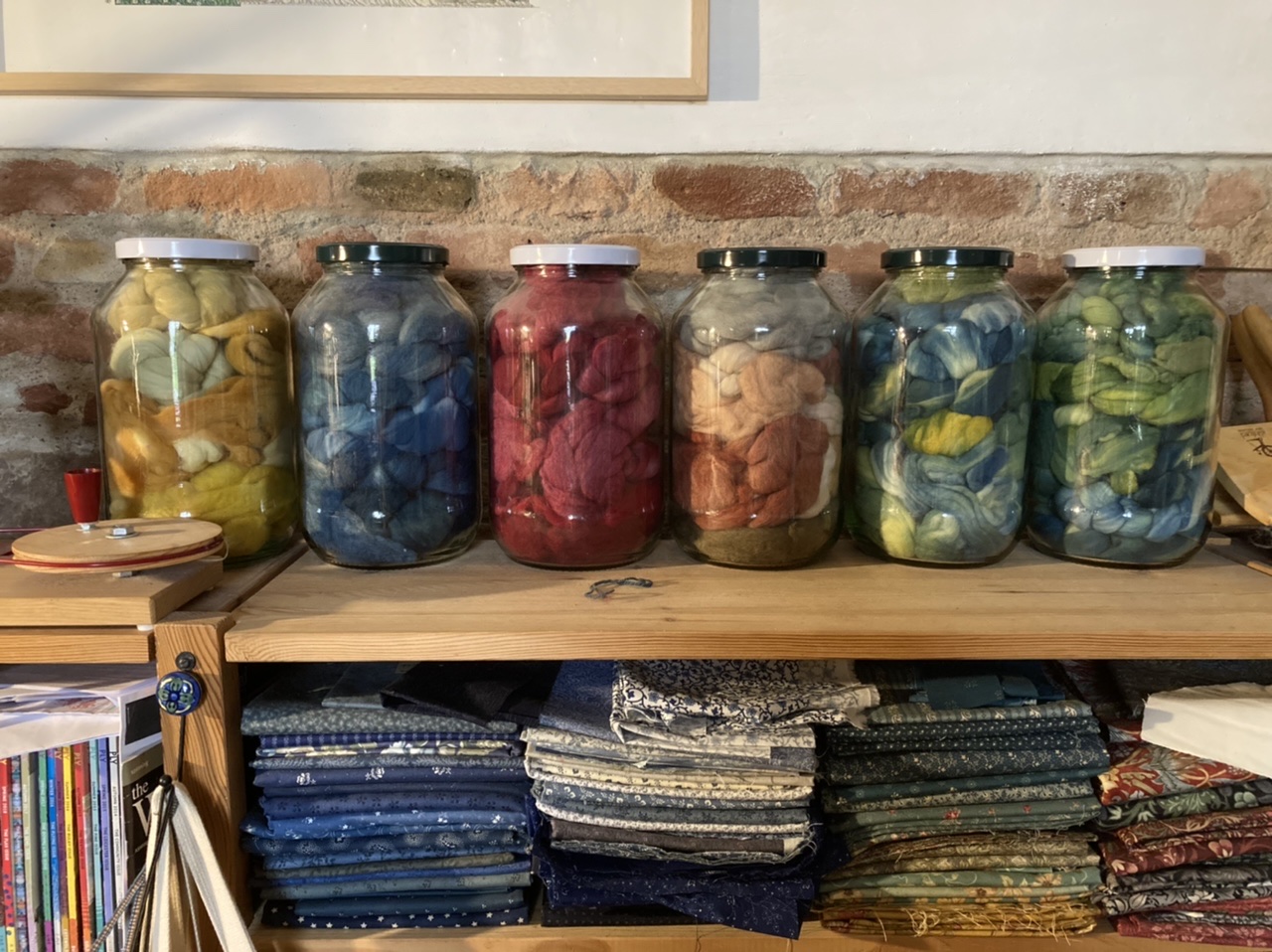
Usually I dye my yarn with plants which I collect in the woods or get from garden flowers. I also use cochineal and indigo, which I buy, to get lots of different colours. I really love the greens and blues I get from dyeing with indigo. I have lots of dyed wool, and all those colours give me inspiration for further projects.
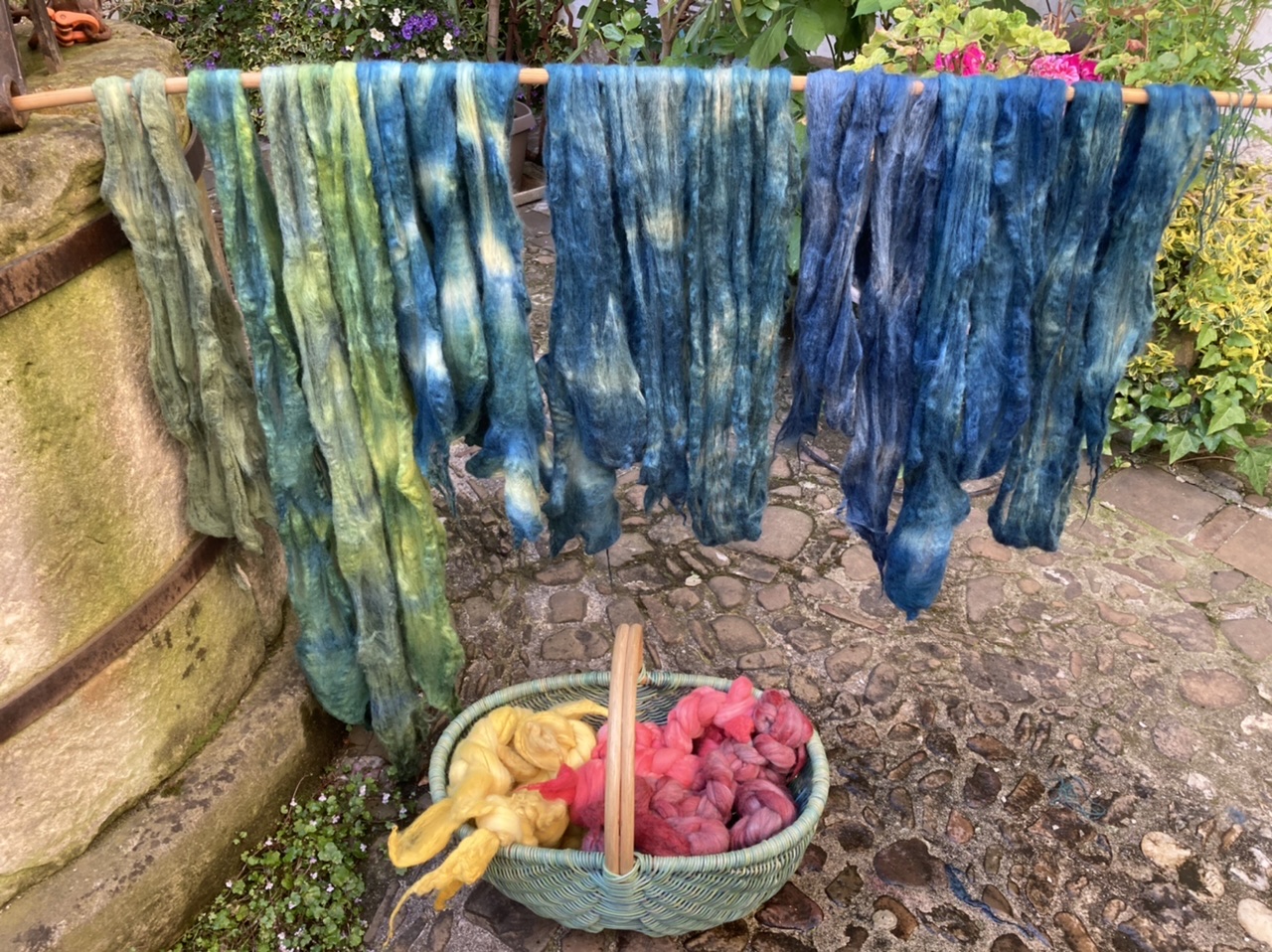
Beautiful greens and blues dyed by the author using indigo and other natural dyes.
Blending the wool on the drum carder I can get even more shades. I like to blend with fibres like silk, alpaca, or plant fibres, and I love sari silk, to get those little bits of colour in my yarn.
Fibres of different types and colours are blended on a drum carder for elegant results.
When I have an idea for the next sweater, I start carding, and then I can begin to spin. Once I have spun enough yarn – say, for one day – I cast on and start knitting, usually top down, so I don’t have to decide too much in advance about length and width.
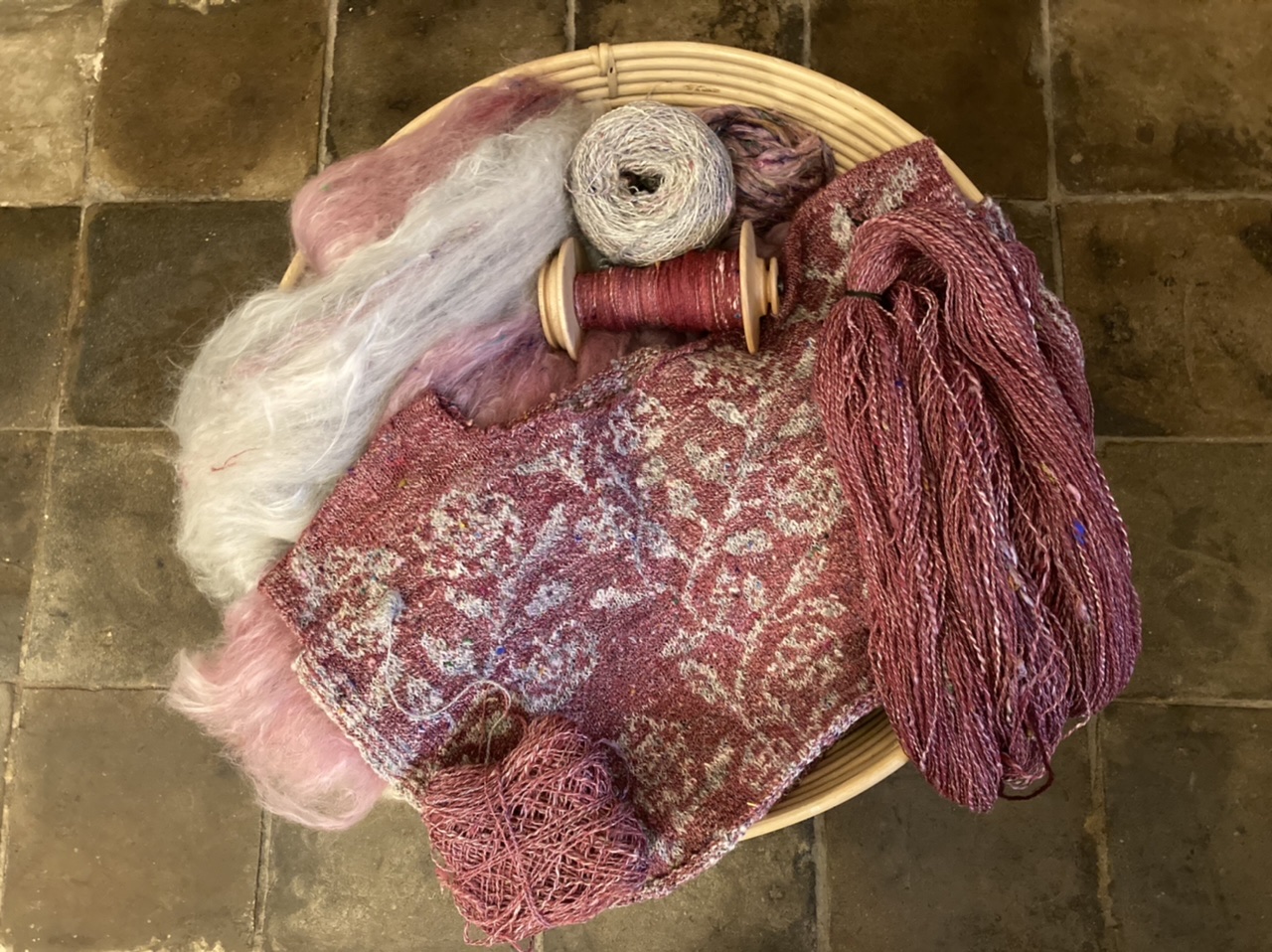
An idea for the author’s next sweater in the gathering stages.
When I spin on my wheel, I have to sit at home, but while spinning I can read a book or talk to others during online meetings. I also like to spin on my spindles, and that works on a walk, or a museum visit. I take them on holiday as they don’t need much space, and when I spin for a lace shawl, I don’t even need much wool either. At home there are spindles all over the place; I can spin when I am waiting for the kettle to boil, when the computer is slow, when I am cooking. Like that I can make good use of a short time and the yarn still grows.
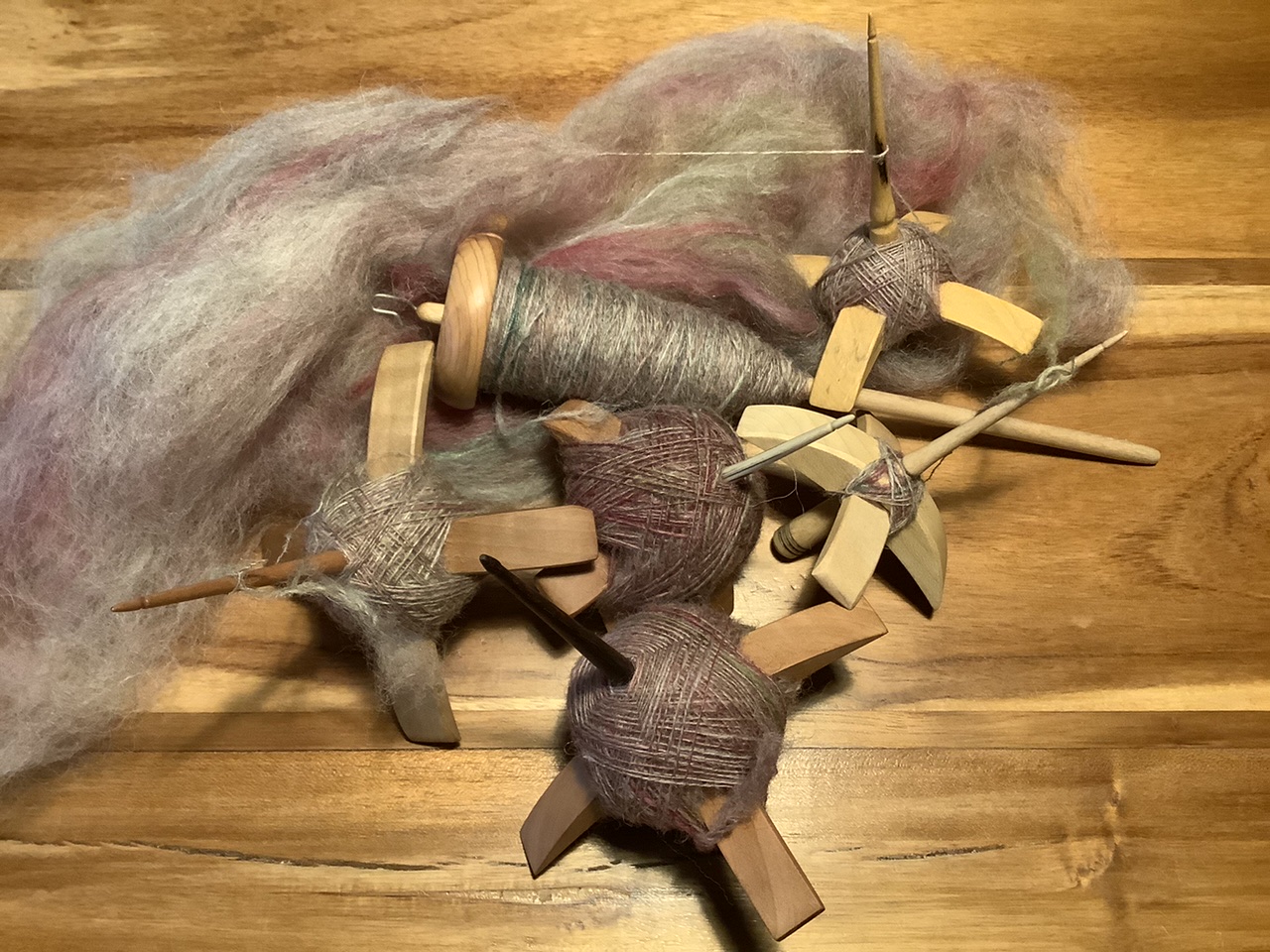
Knitting as soon as the yarn is spun helps the author complete sweater projects in a timely manner.
I can take my knitting almost everywhere, which is why I don’t want to wait to get started until I have spun all the yarn for a whole sweater. I knit at home, on the bus or train. The only thing I have to make sure of is to be one step ahead with the yarn.
I love to knit Fair Isle sweaters. My favourite method is to use only one bobbin, which I don’t even fill, because I need smaller quantities of lots of colours. Then I wind a ply ball and ply it on itself. For that I put my thumb through the ball, so I can tension the two singles with my fingers and they don’t get tangled, as long as my thumb (or a cardboard roll or a pencil) stays in the middle. I don’t have any leftovers from plying, and it is quick when I suddenly need more yarn.
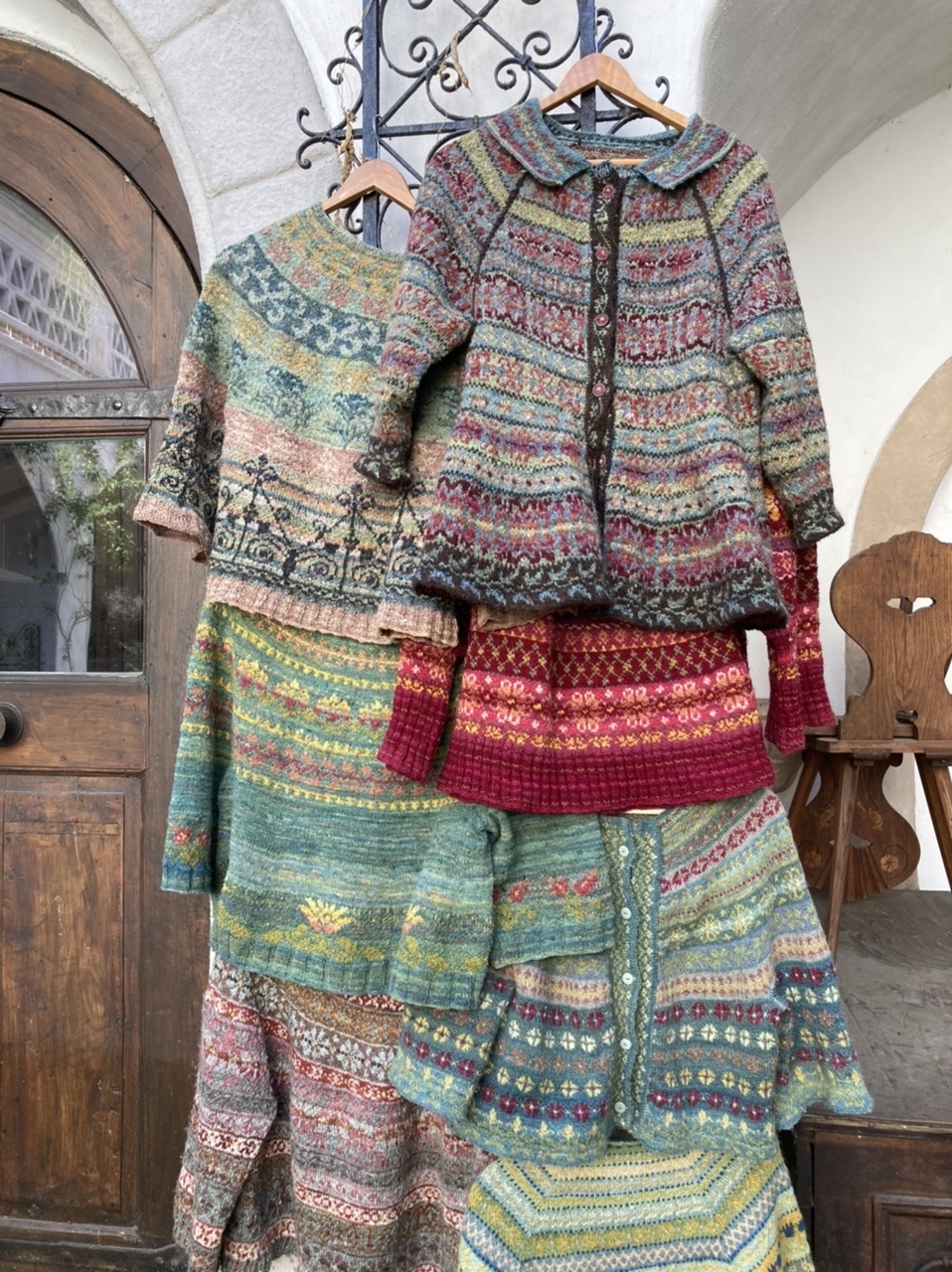
Several charming sweaters dyed, spun, and knit by the author.
I have never had problems with the yarn not being consistent enough throughout a project. I just know what yarn I want and my fingers seem to remember what to do. I am sure it is good advice to have a little card tied to the spinning wheel with a bit of the singles you are aiming for, so you can check and make sure you are spinning a consistent yarn.
Mixing breeds
There are so many different breeds, but some of my favourites are Shetland, BFL, and Jämtland – a Swedish breed. After dyeing them, I often forget what I have used, so when I do a new project it often turns out that I have used different breeds and fibres just to get the right colour. For the Fair Isle knitting I want to juggle lots of colours, which is more important to me than making a sweater out of only one breed.
Recently I made a pullover for my husband using about 12 different breeds and colours, even mixing short and long draw. For me it was a breed experiment and a way to use up lots of smaller quantities of wool I had in my stash. For that sweater I used combed top without blending.
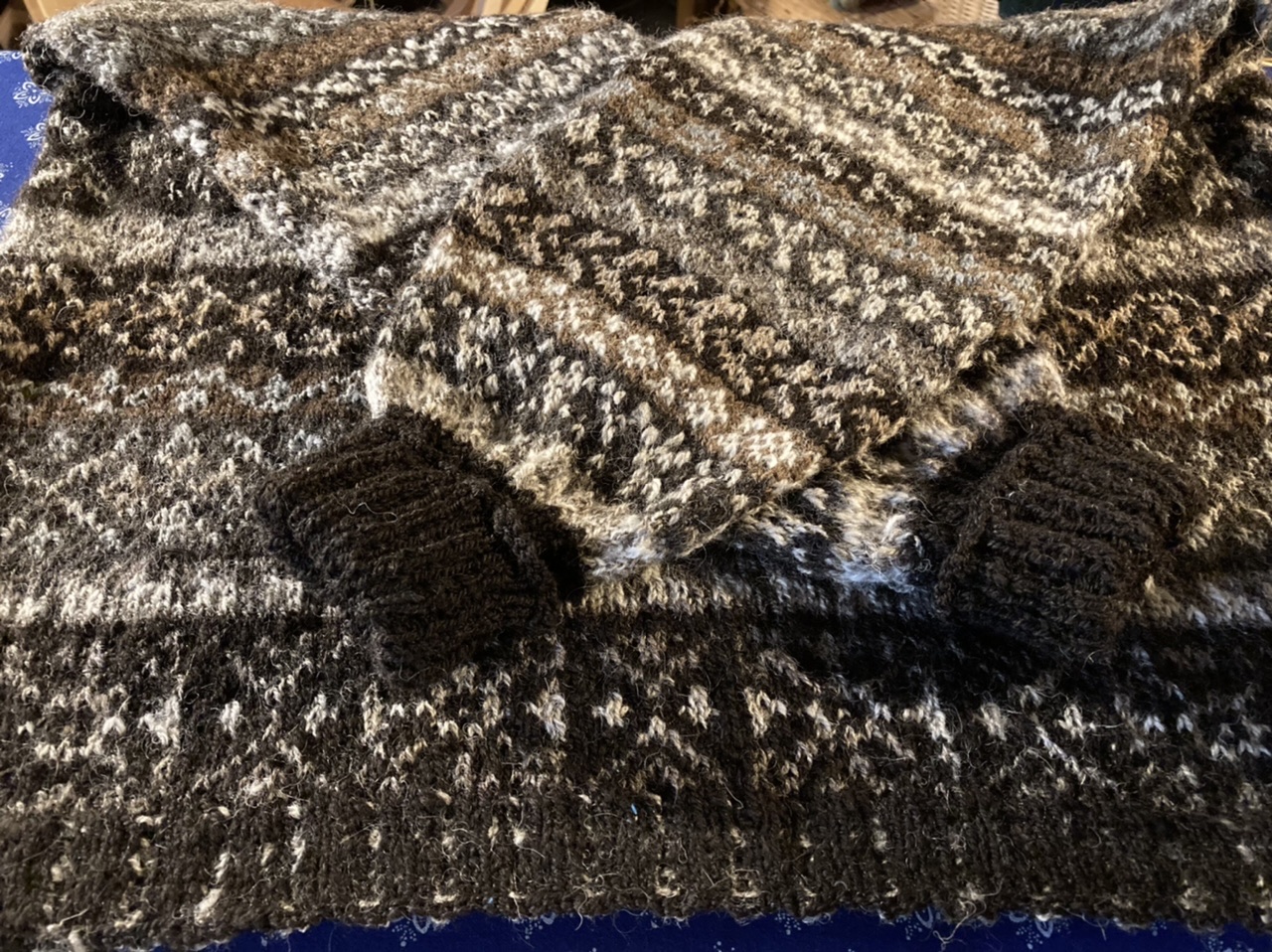
Mixing in knitting during the spinning process is a wonderful way for a spinner to avoid being overwhelmed during a sweater project.
My feeling is that some people don’t dare to start spinning for a bigger project because they get overwhelmed by the quantity they have to spin and then all the knitting there is to do, especially when you want to spin the yarn entirely on spindles. Mixing the spinning and knitting for the same project is more interesting; you get more variety and more freedom to choose what you want to do next as long as you don’t run out of yarn. It breaks the project down into smaller, less daunting parts. The only thing you might want to plan is to have enough fibre at the start, but even that is not necessary, there is always a sheep growing more wool.
Sneak Peek: The Winter 2024 Issue!
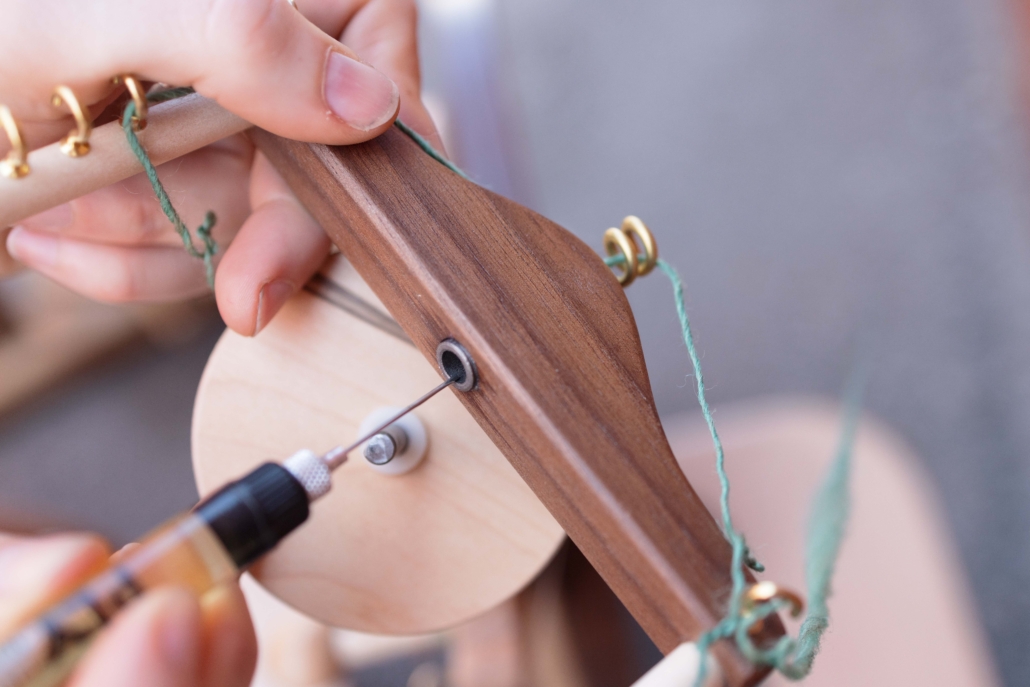
The PLY Winter 2024 issue is set to be released early next month, and we are so excited about this issue because the topic is Care!
Let me tell you, this issue is PACKED. Sustainability, ergonomics, textile conservation, tool upkeep… We’ve got it this quarter!
Just a few highlights:
Andrea Peart tells us about dealing with wool sensitivities and how she has handled being a handspinner in a world where Merino is king.
Maggie Casey shows us all about caring for our spinning wheels and talks about how innovation has changed the way we care for wheels!
Anne Choi delves deep into the history of Korean textiles, a history that is rife with cultural erasure and contemporary disregard.
Natasha Sills of Gritty Knits tells us how she has learned to turn her brain off and take a break while carding to help her manage her arthritis.
And there is so, so much more!
We hope you’re as excited for this issue as we are! Be sure to subscribe (or renew your subscription) by the end of the month to make sure you don’t miss out on this issue!
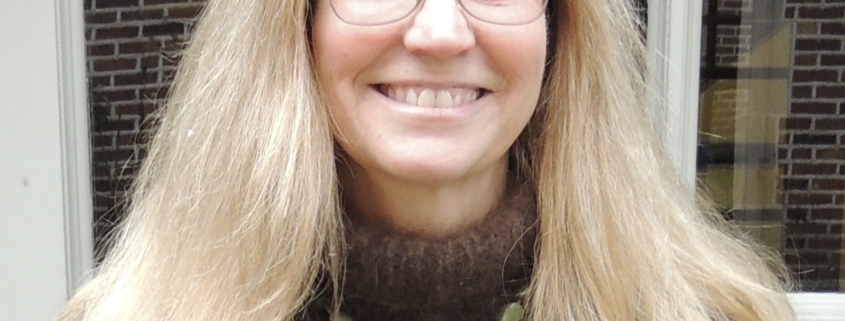
Meet the Team: Jeannie Sanke
In a community like ours, the people are every bit as important as the craft. It may sound cliché, but we aren’t just fiber people. We are fiber people “together.” The team that curates PLY Magazine is small but mighty. You’ve seen their names at the front of every issue. You may have seen their faces at this or that fiber conference. How much do you really know about the magical people who produce PLY?
Over the next few months, we will be interviewing and featuring members of the PLY team here on the blog!
Advertising
Who are you and what is your role with PLY?
My name is Jeannie Sanke, and I handle advertising for PLY and WEFT. I joined the team this past summer. Long-time reader, first-time contributor.
How long have you been a spinner?
I’ve been spinning for 10 years, knitting for over fifty. My favorite fiber is chiengora.
What do you do when you’re not spinning or working on the magazine?
Right now I’m translating a press release on an engineering conference covering new developments in plastics recycling. I also teach privately, handle marketing and tech support for a local business, serve on my condo board, and process a ton of fiber. And my neighbor is running for local office, so I help with his campaign.
You’re not busy at all, are you? What’s a fun fact about yourself, Jeannie?
I have a Ph.D. but my mother, bless her heart, was always prouder of my Jeopardy! appearance.
What’s your favorite weird fiber fact?
Keratin. ‘Nuff said.
Anything else you’d like to share with our followers?
Trek needs more fiber arts. That is all.
Alpaca Wool: A Misnomer

How many times have you heard someone selling their alpaca wool? Or touting their alpaca wool scarf? The only problem is that it isn’t wool. Let me explain!
Fibers can be categorized into a few different classes, including hair, wool, and fur (excluding kemp and guard hair for the moment).
Let’s check out Meagan’s handy chart to get us started.
FIBER TYPE | QUALITIES | ||||
| CUTICLE | MEDULATION | GROWTH | DENSITY | SEBUM | |
| FUR | Scales overlap, forming as many as 10 layers | Generally present and pronounced | Reaches a maximum length and then sheds | Higher than 60,000 follicles/sq inch | Limited quantity of sebum |
| HAIR | Scales overlap, forming as many as 10 layers | Generally present and pronounced | Continuous growth, but sheds | 500 follicles/sq inch Only 100-200 active follicles at a time | Limited quantity of sebum |
| WOOL | In fine wools, scales overlap, usually forming 1-2 layers. Scales are barbed | Generally absent or almost absent | Continuous, if not sheared | Up to 60,000 follicles/sq inch | Lanolin in varying quantities |
Alpaca is actually a hair fiber, like our own hair. Like us, they shed a small amount of their fiber, but it continues to grow and get longer if we don’t cut it. Because of this continuous growth, alpacas have to be sheared regularly for their health.
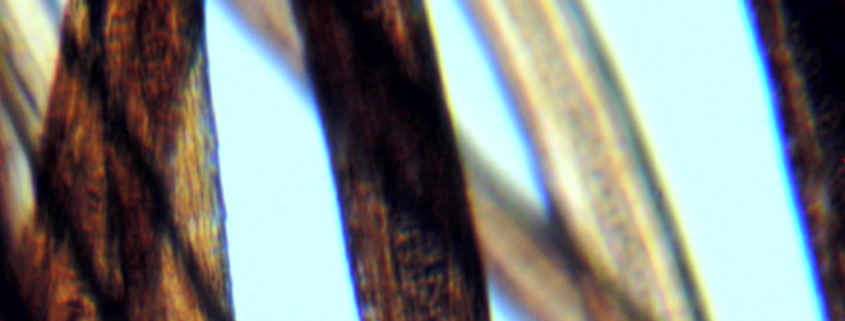
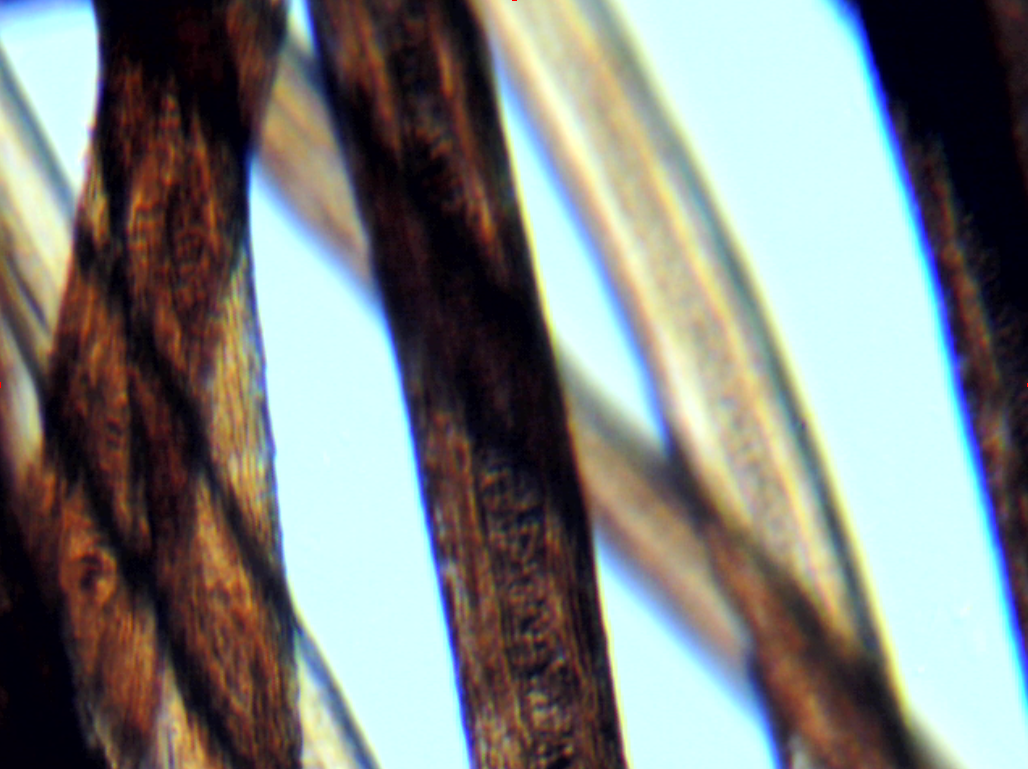
Check out this microscopic view of alpaca fibers. The first thing you might notice is the dark line going down the center of each fiber. This is the hollow medulla.
Air = Warmth
Any time there is air trapped in a fiber, it contributes to it being a warmer fiber. Air is an insulator. Wool does not have a hollow center, which is one of the reasons why alpaca is so much warmer than wool.
The keratin structures in alpaca fiber are different than the structures in high-memory wool. As a result, the fiber has almost no memory. That means it will not return to its original shape once it has been stretched out. This is great for drape, but not great for anything that requires stretch, like socks or mittens. We often blend wool with alpaca to compensate for its lack of stretch.
While it may be tempting to call alpaca wool because it is so squishy and wool-like, there are some fundamental differences that mean that the fibers behave differently. Are the spinning police going to come after you if you call alpaca wool? No way! Still, it is sometimes helpful to have that scientific distinction to help guide your creative process.


Leave a Reply
Want to join the discussion?Feel free to contribute!