
Mixing Things up for a Sweater
words and photos by: Johanna Carter
I always admire those who are able to spin mountains of yarn for a big project, ready to knit a wonderful sweater or cardigan. It is a satisfying feeling when you finish all that work, especially if you started with washing and combing the wool or even raising your own sheep.
Mixing spinning and knitting
The typical way to work through a larger project is to spin all the singles first and ply them in a particular order so you get the yarn even throughout the whole project. I don’t have so many bobbins, but my bigger problem is that I am quite impatient and want to get on with knitting once I have an idea. And normally, my brain is full of ideas for fibre work and the limit is the time, as I am a musician and teacher. I can’t sit at the spinning wheel for a long time if I’m not on holiday, so during the school year I mostly knit, and during the holidays I can dye, spin, use my drum carder, and do lots of fibre work. The only time I was able to produce bigger quantities of yarn before I knitted them up was during the Tour de Fleece in the two years during the pandemic, when we did not go on holiday at the beginning of July.
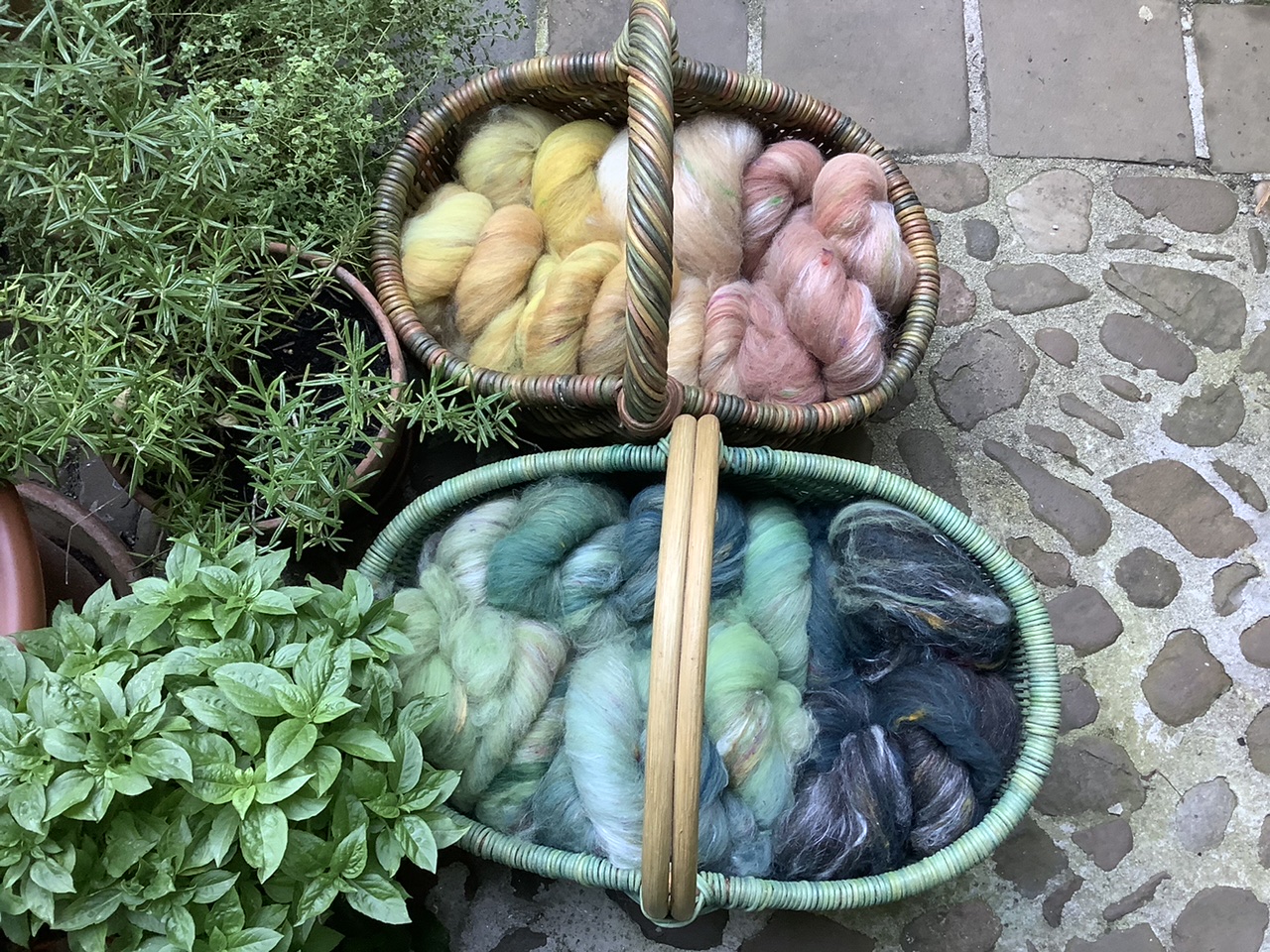
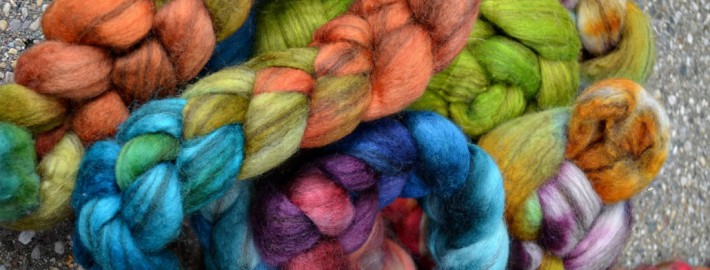
A highly photogenic collection of naturally dyed fibres.
I like to finish knitting one big project like a sweater or cardigan before I start the next one, or at least until I can’t carry it in my bag easily anymore, so I have an excuse to begin the next one. Sometimes it is good to have a second project on the go – I call it mindless knitting, where I don’t have to look very much – which I can keep my hands busy during Zoom or other meetings, which helps me listen.
Mixing colours and fibres
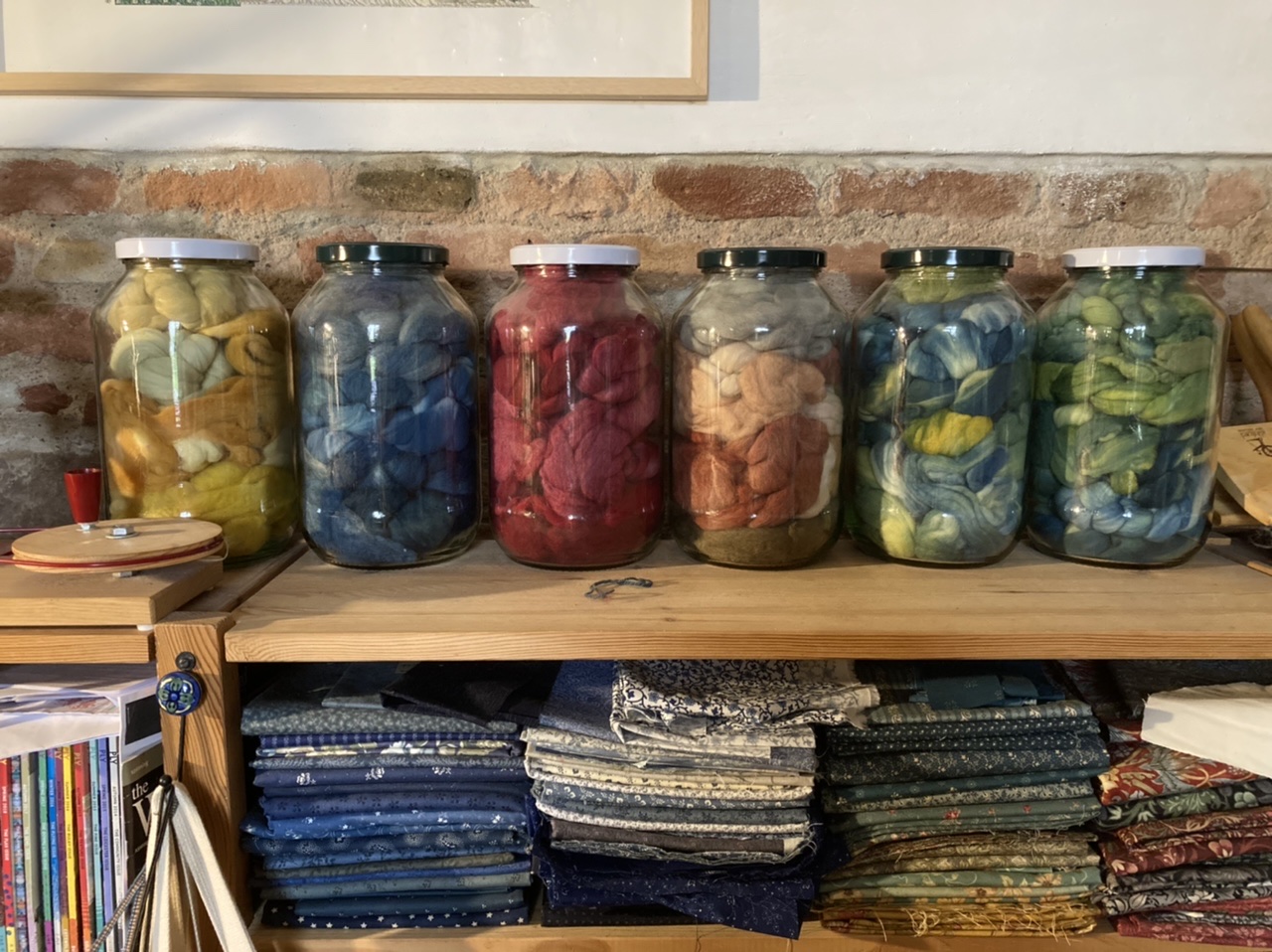
Usually I dye my yarn with plants which I collect in the woods or get from garden flowers. I also use cochineal and indigo, which I buy, to get lots of different colours. I really love the greens and blues I get from dyeing with indigo. I have lots of dyed wool, and all those colours give me inspiration for further projects.
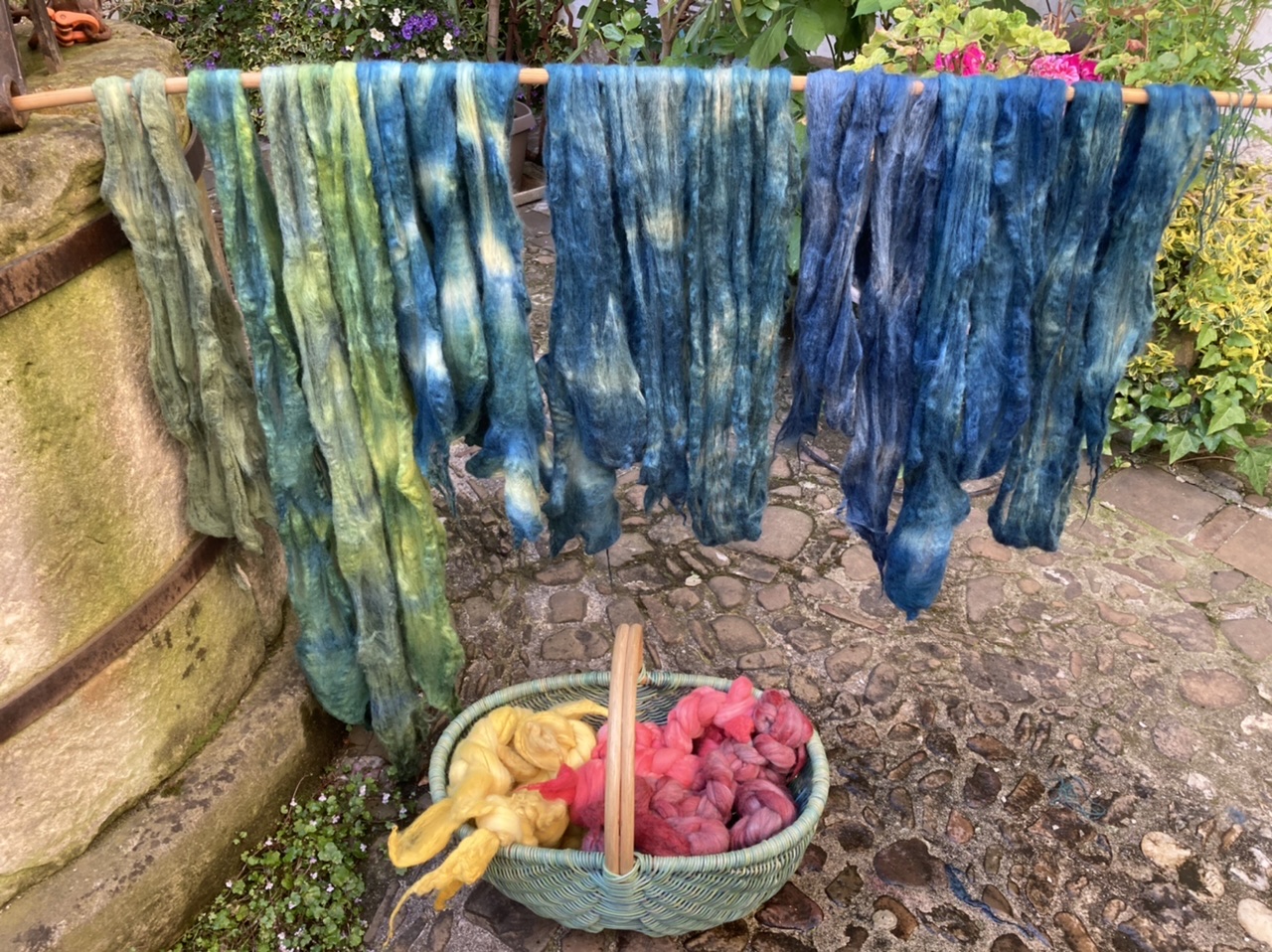
Beautiful greens and blues dyed by the author using indigo and other natural dyes.
Blending the wool on the drum carder I can get even more shades. I like to blend with fibres like silk, alpaca, or plant fibres, and I love sari silk, to get those little bits of colour in my yarn.
Fibres of different types and colours are blended on a drum carder for elegant results.
When I have an idea for the next sweater, I start carding, and then I can begin to spin. Once I have spun enough yarn – say, for one day – I cast on and start knitting, usually top down, so I don’t have to decide too much in advance about length and width.
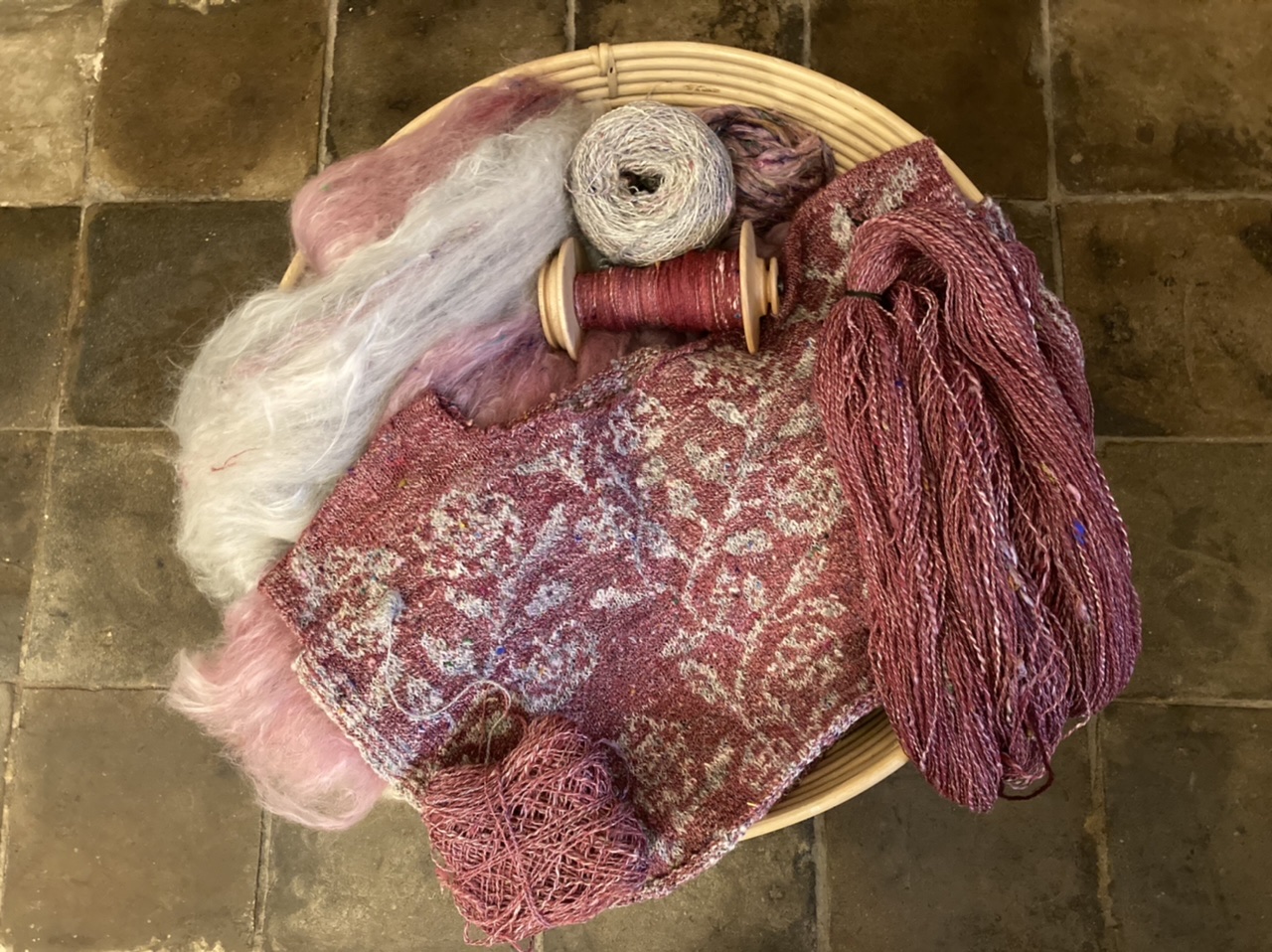
An idea for the author’s next sweater in the gathering stages.
When I spin on my wheel, I have to sit at home, but while spinning I can read a book or talk to others during online meetings. I also like to spin on my spindles, and that works on a walk, or a museum visit. I take them on holiday as they don’t need much space, and when I spin for a lace shawl, I don’t even need much wool either. At home there are spindles all over the place; I can spin when I am waiting for the kettle to boil, when the computer is slow, when I am cooking. Like that I can make good use of a short time and the yarn still grows.
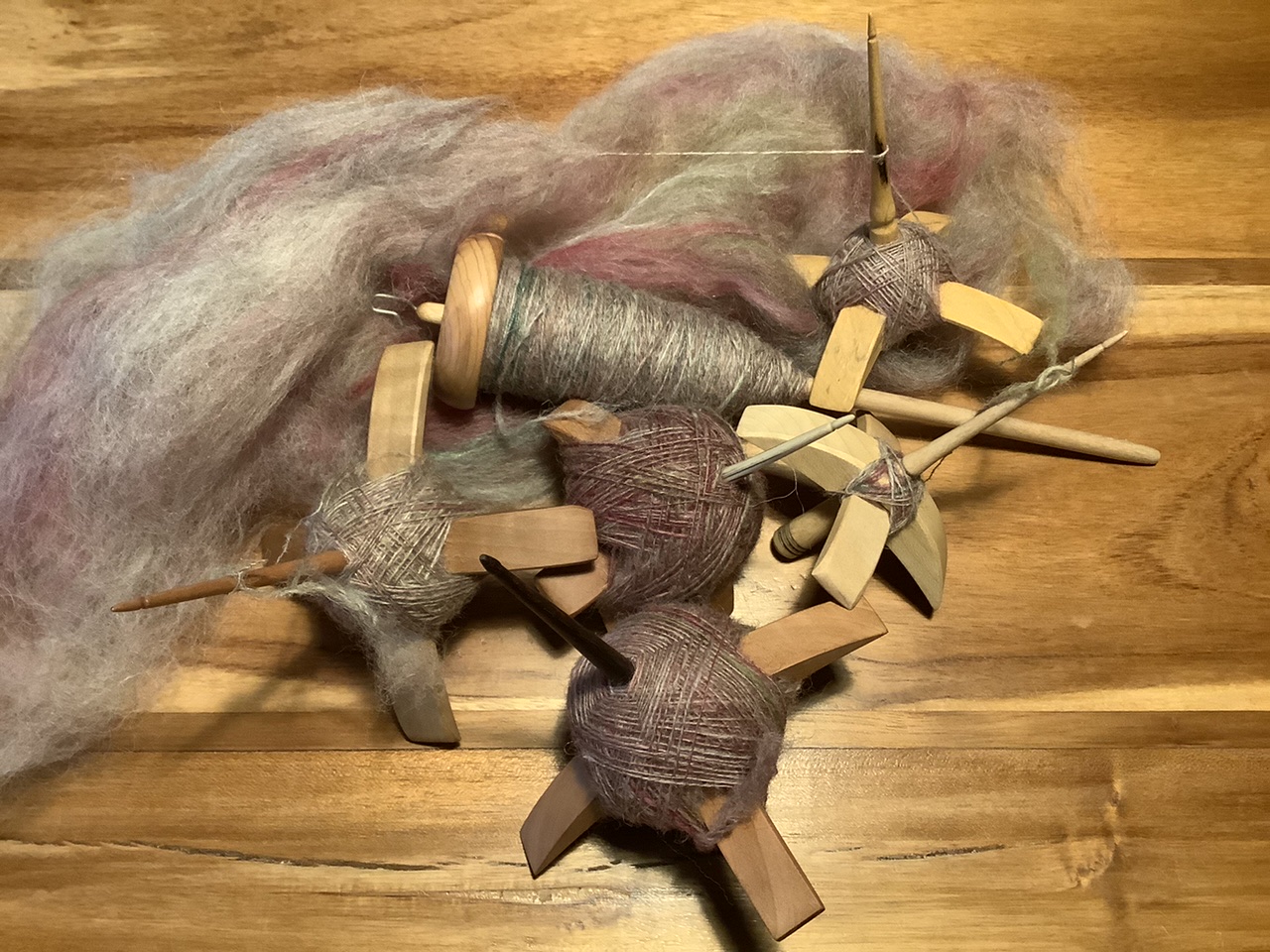
Knitting as soon as the yarn is spun helps the author complete sweater projects in a timely manner.
I can take my knitting almost everywhere, which is why I don’t want to wait to get started until I have spun all the yarn for a whole sweater. I knit at home, on the bus or train. The only thing I have to make sure of is to be one step ahead with the yarn.
I love to knit Fair Isle sweaters. My favourite method is to use only one bobbin, which I don’t even fill, because I need smaller quantities of lots of colours. Then I wind a ply ball and ply it on itself. For that I put my thumb through the ball, so I can tension the two singles with my fingers and they don’t get tangled, as long as my thumb (or a cardboard roll or a pencil) stays in the middle. I don’t have any leftovers from plying, and it is quick when I suddenly need more yarn.
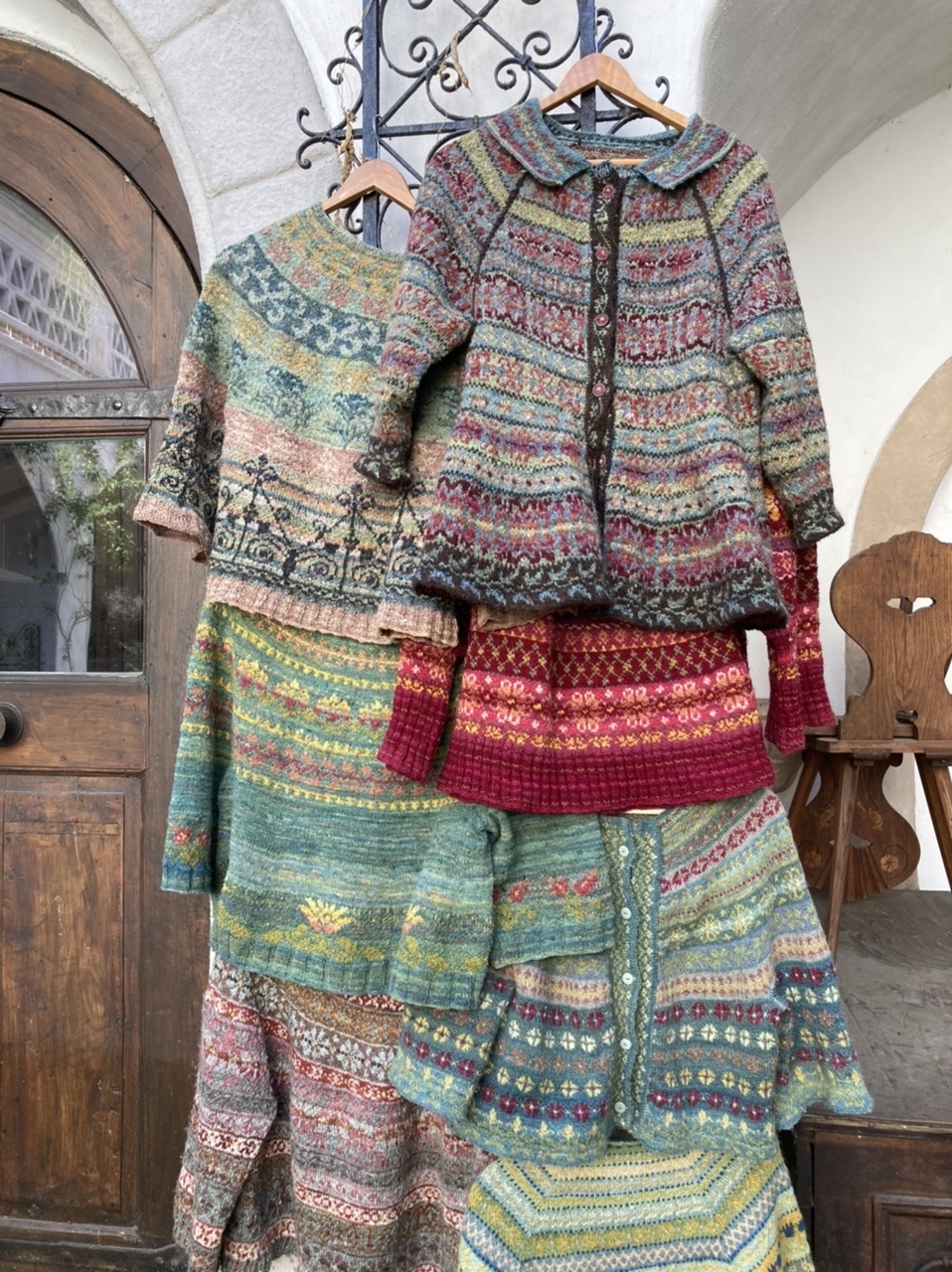
Several charming sweaters dyed, spun, and knit by the author.
I have never had problems with the yarn not being consistent enough throughout a project. I just know what yarn I want and my fingers seem to remember what to do. I am sure it is good advice to have a little card tied to the spinning wheel with a bit of the singles you are aiming for, so you can check and make sure you are spinning a consistent yarn.
Mixing breeds
There are so many different breeds, but some of my favourites are Shetland, BFL, and Jämtland – a Swedish breed. After dyeing them, I often forget what I have used, so when I do a new project it often turns out that I have used different breeds and fibres just to get the right colour. For the Fair Isle knitting I want to juggle lots of colours, which is more important to me than making a sweater out of only one breed.
Recently I made a pullover for my husband using about 12 different breeds and colours, even mixing short and long draw. For me it was a breed experiment and a way to use up lots of smaller quantities of wool I had in my stash. For that sweater I used combed top without blending.
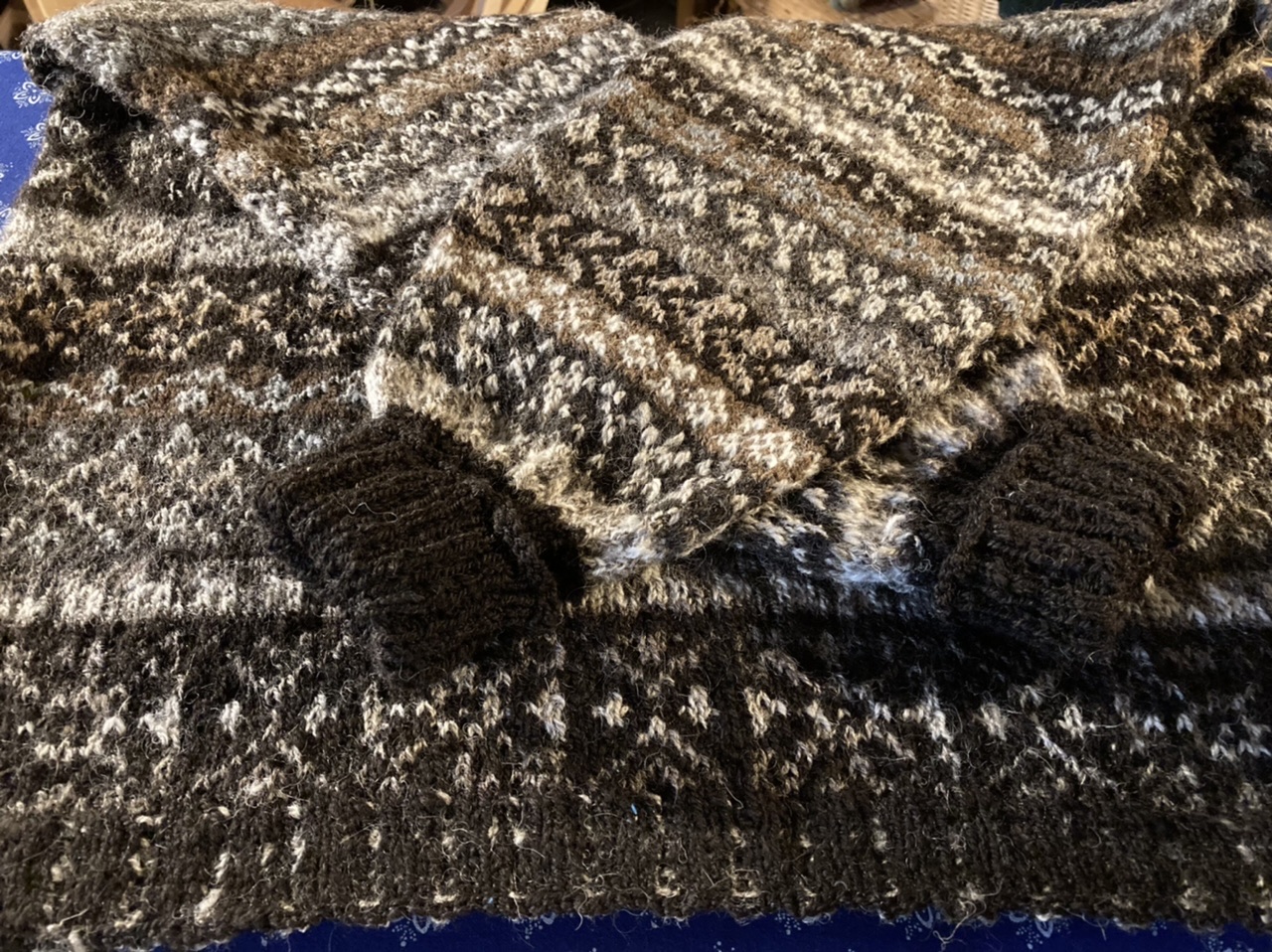
Mixing in knitting during the spinning process is a wonderful way for a spinner to avoid being overwhelmed during a sweater project.
My feeling is that some people don’t dare to start spinning for a bigger project because they get overwhelmed by the quantity they have to spin and then all the knitting there is to do, especially when you want to spin the yarn entirely on spindles. Mixing the spinning and knitting for the same project is more interesting; you get more variety and more freedom to choose what you want to do next as long as you don’t run out of yarn. It breaks the project down into smaller, less daunting parts. The only thing you might want to plan is to have enough fibre at the start, but even that is not necessary, there is always a sheep growing more wool.
Spinzilla team roster: Bonny Acklin, aka Bonfiber!
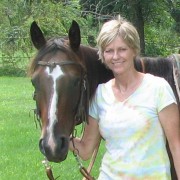 Name: Bonny Acklin
Spinning nickname: bonfiber
Years spinning: 4
Location: Northwest Missouri
Spinning tool of choice for spinzilla: Lendrum Original DT
Favorite weight of yarn: Fingering.DK …since I love knitting socks and shawls
Favorite fiber for fast spinning: anything crimpy, roving, batts and rolags
Favorite treat to drink while spinning: beer with lime!
Project you’ll be spinning for: 3 different shawls, http://www.ravelry.com/patterns/library/kalimna-shawl , http://www.ravelry.com/patterns/library/pebble-beach-shawlette and http://www.ravelry.com/patterns/library/let-your-heart-unwind
Personal Spinzilla goal: I’ve never every participated in a spinning competition. I have no clue what to say in yards. So let’s say my goal is to spin as much and as fast as I possibly can. If I’m not at work, eating or sleeping, I’ll be spinning!
Personal bio: I grew up in the city but a cowboy stole my heart and now I’m a country girl. I live in rural Northwest Missouri on a farm with my hubby, 2 dogs and 10 horses.
As a child I hated school and was only interested in art. I’m so lucky to have parents who fostered my creative talents as I was growing up. Now I’m an art teacher. Teaching art, I’ve dabbled in every medium….fibers is the only one I’ve stuck with for any length of time. While I love to spin, knit and crochet (a little), I’m most intrigued with dyeing fiber. I’m never bored when I’m standing over the dye pot! I have a little Etsy shop…https://www.etsy.com/shop/bonfiber
So, since I’ve never played a team sport in my life, no NEVER! I’m considering this my first team experience. I’m ready to spin until I drop!
Ideas: What Am I Going to Write About?
I write about spinning. That’s a big part of my job and I feel grateful every day. When I first started getting more writing work I started freaking out about ideas – what am I going to write about?
I think writing about spinning is important, so I wanted to have IDEAS, and write about Big Important Things. When I approached my writing that way it made me feel tired, uninspired and unlikely to get any words on paper. I quickly shifted my thinking and have it down to a more or less 5 step process. I do these in any order and sometimes skip over or merge steps.
1) What am I curious about?
One of the main reasons I write is to learn. If something is knocking on my brain asking me to explore it there’s a good chance that I’m going to find a writing idea there. Especially if this something keeps circling around and kicking me in the shin. It happens a lot when I’m spinning, all of the questions start flowing in, what if I did this differently, why do I have so much trouble with this? I grab onto one or two or ten things that flow in and write them down. Then I keep moving through my process.
2) What are other people curious and excited about?
I don’t intentionally go looking for the questions or ideas that have made me curious, instead I listen to the spinners’ ether. I just keep reading the same blogs, magazines, boards, books that I always do, but now part of my attention is tuned to those idea seeds. It’s amazing to me how those threads always pop up. Everyone is curious, lots of times about the same thing, but not in the same way. This week I got curious about blending boards and I found so many words about different aspects of them – better overall blending of fibers, easier to keep color distinct, faster than handcards, easier than a drum carder, etc.
3) Distill
At some point the idea gets too big or confusing in my mind to write about easily or I start only thinking about one part of the idea and I know it’s time to focus. I distill the idea down like corn into moonshine. Again, it comes down to interest and curiosity, what do I want to know or what sounds fun or interesting? Do I want to do an overview of something or get deep into a single aspect? Thinking about woolen preparation can become an overview of three or four ways to do woolen prep or the difference flat-back or curved-back hand cards make to carding.
4) Visuals
I like to think about how it will all look when it’s done. That helps me focus even more. What pictures do I need? What has to be shown, what would be nice to have if there is space. I don’t just think about pictures for this step, I also think about what could stand alone as a sidebar or box. It could be something to emphasize in the article or the answer to a frequently asked question. For an article on buying hand cards it could be Three Things to Think About When Buying Cards or Cotton Cards for Wool?
5) Be true to me
Back when I was trying to write about IDEAS I wanted to sound important too. But I never felt like more of a fraud than when I didn’t sound like myself, whether it was my approach to an idea or the actual words I used. Every spinning writer has their own unique approach and style. You can give four writers the article prompt Rolags for Woolen Spinning and get four very different articles back. Now I know pretty quickly if I’m veering from Jillian-style into Not-Jilian-Style. This has helped me say no to or reconfigure article pitches that really don’t fit my style. I wouldn’t write an article on Carding a Structurally Sound Rolag, but would love to write Carding Rolags for Beautiful Sweater Yarn.
Back to the wheel for me, I have writing deadlines!
PLY like an eagle
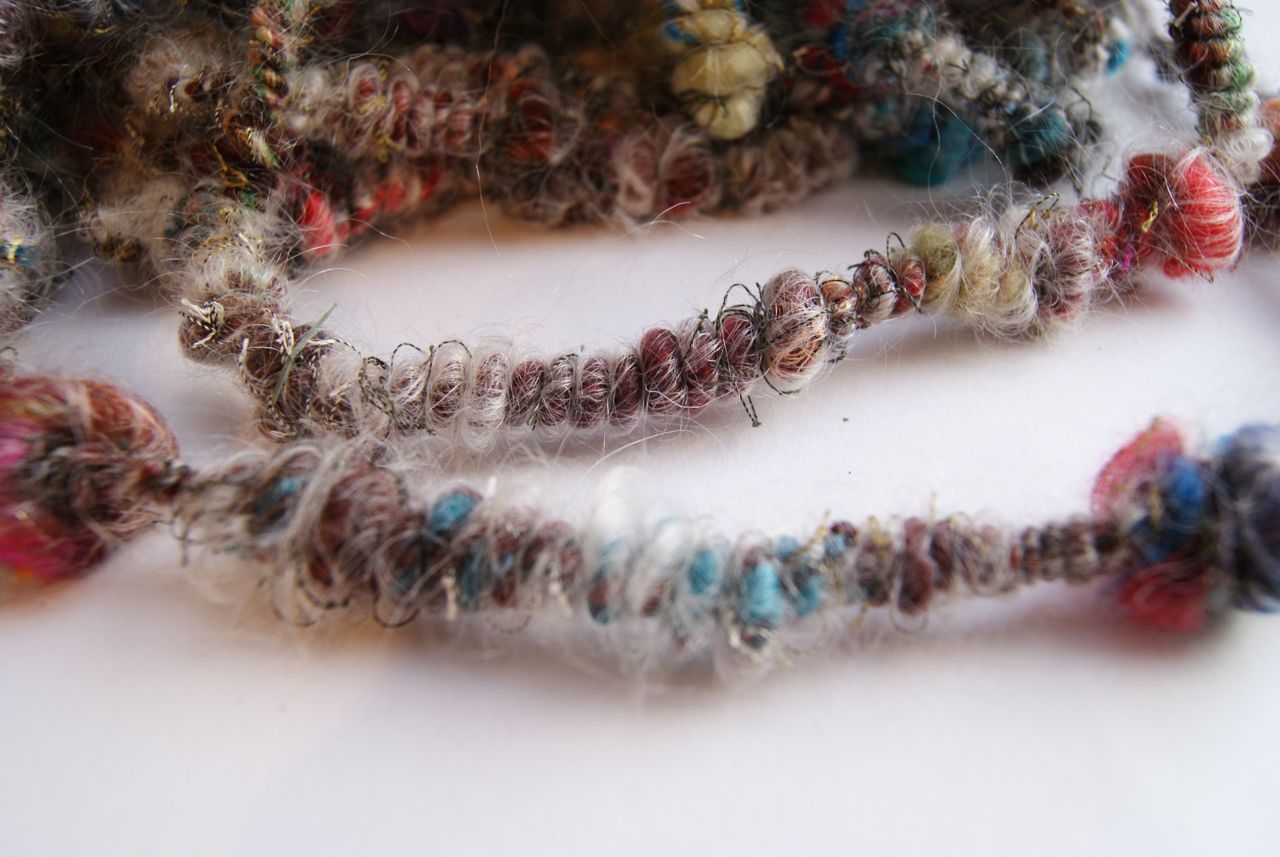
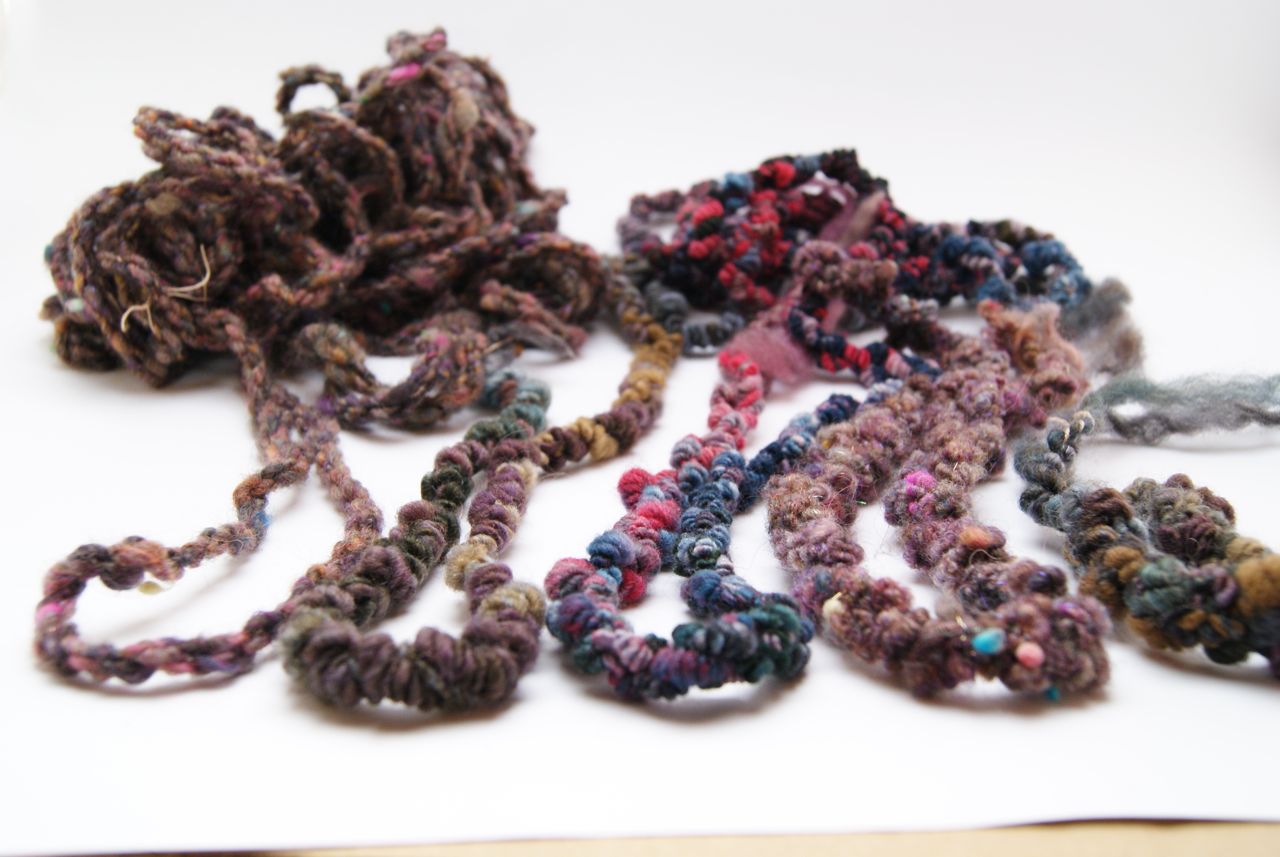
Spinzilla invited me to be part of their 2015 blog tour. I was assigned the topic of plying and if there’s anything I know, it’s plying. I’ve plied even, I’ve plied off-tensioned, I’ve plied with a push up and a squiggle, I’ve plied the same yarn this way and that way and over and over. I used to devote one workday a week to experimental plying. Once I plied a yarn 6 times, just to see what would happen.
-

- Experiments in plying
-

- experiments in plying
-

- just because I could

-

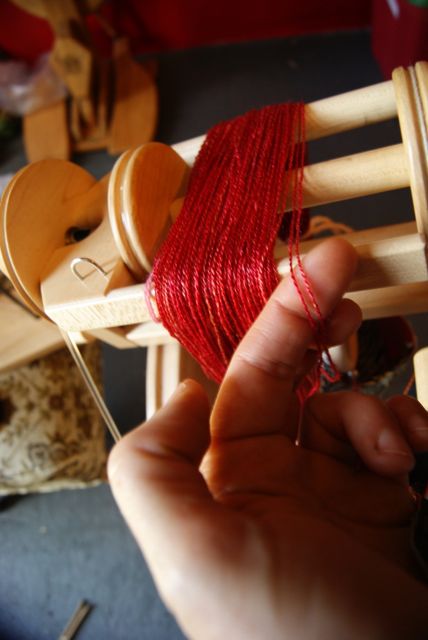
- seeing how fine I can ply
-

- supercoil plying

Yep, it’s no secret that I’ve made my career off of plying, from the beginning to now and into the foreseeable future. My first years selling yarn, teaching and writing were based on plying. Man alive did I love spinning coils. It’s all I wanted to do for a while. Did I ever tell you how I learned? It was way back before etsy and ravelry. People were still using LJ (live journal) and I happened upon a photo of a yarn by Adrian Bazilia. I’d been spinning straight and sturdy yarn for 2 years and here was this poppy, fun yarn that sung to my spinning soul. I e-mailed her and asked her how she accomplished such a feat. She (gracefully, for I was a complete stranger asking her to write a tutorial for me when she’d rather be spinning, canning, and dying fiber) sent me a quick run down of the steps needed to coil .*
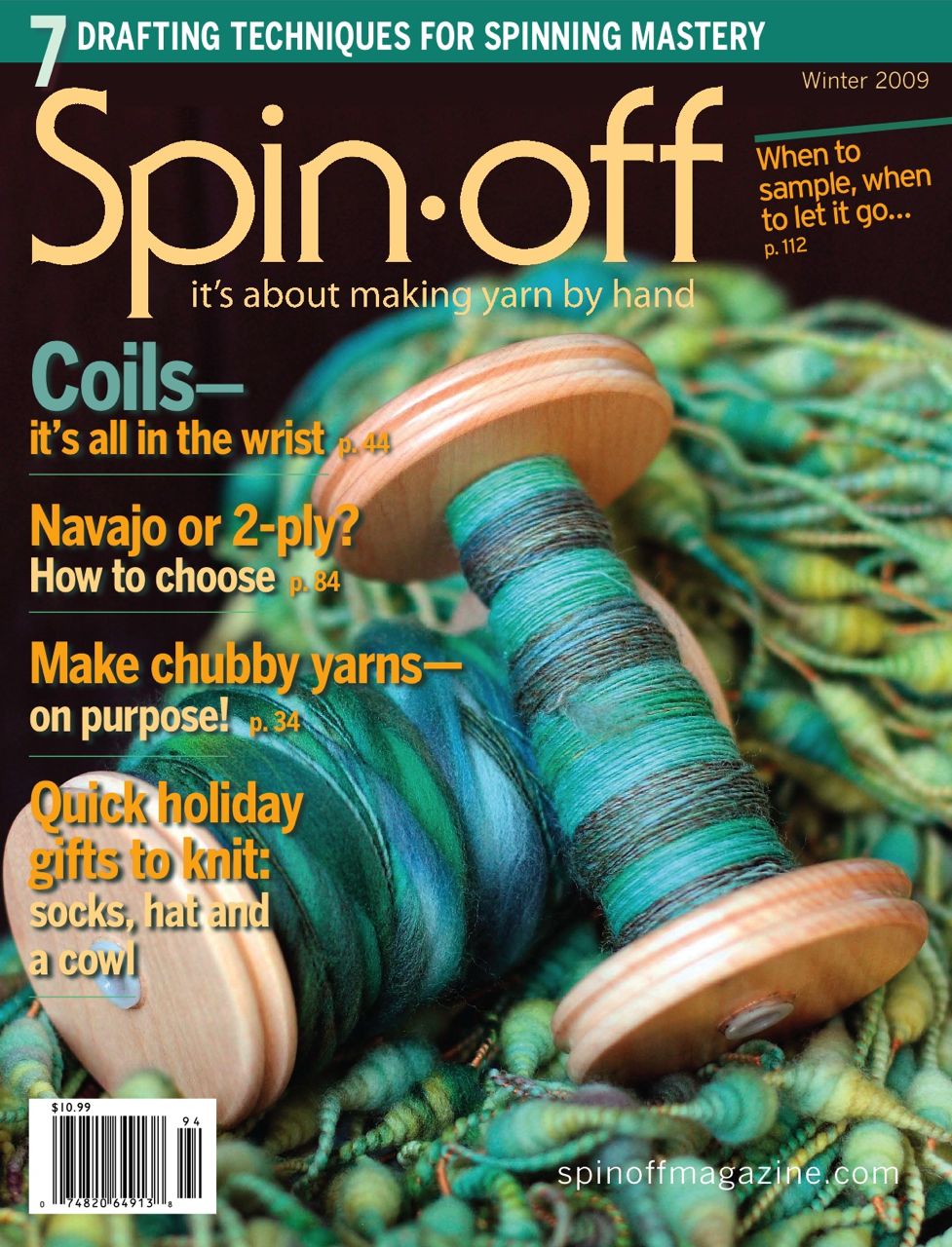 The first 5 years of my spinning career was all about plying. I supported a family of 3 and then 4 with what Esther Rodgers now calls “wild-plied yarns” but what I called “textured spinning” in an attempt to escape the moniker “art yarn”. I spun 6 hours a day 5 days a week and we scraped by. I mean, seriously scraped by. Of course, Sit and Spin came and went and then articles for Spin Off (and my first cover!). Thank goodness for Spin Off! I really feel like it was due to that long-running magazine that current-day textured spinning got legitimatized in the eyes of the larger spinning community. And then Spin Art. All the while, my adventures with plying stayed the course.
For me, for a long while, plying was about texture and balance. I was really concerned with balance. I remember telling the Yarn Harlot once, on a shuttle to Madrona, that I felt like everything I spun must be balanced. She asked me why I hated singles so much and I replied that it wasn’t that I hated singles, it’s that I felt like the yarns I was spinning, teaching, basing my career on, were assumed by many to be novelty, unbalance-able, unworkable, and to be taken seriously I needed to show everyone that everything that came off my wheel could hang perfectly straight and was never tension-set. She told me that was silly. She also told me that wearing a sweater the first hour of class until everyone realized I was nice before I took it off and revealed my tattoo-covered arms, was silly too.
She was right on both accounts.
Just like it took me years to find comfort in spinning longdraw, it took me a long time to understand the subtlety of plying. Back before the Yarn Harlot took me to task for not giving fiber people enough credit, both as spinners and as people, I didn’t realize that different yarns required different plying (outside of textured techniques, of course). I was long into spinning before I knew very much. Here’s a few things I’ve picked up about plying:
Yarn shouldn’t come off bobbin hanging straight and limp. I used to feel such a swell of pride taking my yarn off my bobbin seeing no twist in the skein. Limp and flaccid, bah. That’s not how we want our yarns! Give it some life! Let that baby have a bit more twist. You want it coming off the bobbin with a twist or 2 in the skein. It’ll balance out in the end but you’ll have a yarn that feels and looks better, a yarn that says “I’m alive!!
Woolen and worsted yarns don’t’ get the same amount of ply twist. It’s true. A woolen yarn’s structure is in the PLY, that’s what really holds that light and fluffy thing together. It’s what gives it strength and the ability to ward off the dreaded pill. It needs more ply-twist than singles-twist. For reals. Worsted yarn, on the other hand, has it’s structure in the single and it wants less ply-twist, relatively speaking. Truth.
The tighter the ply, the better the wear (not the tighter that single, that way lies rope, my friends).
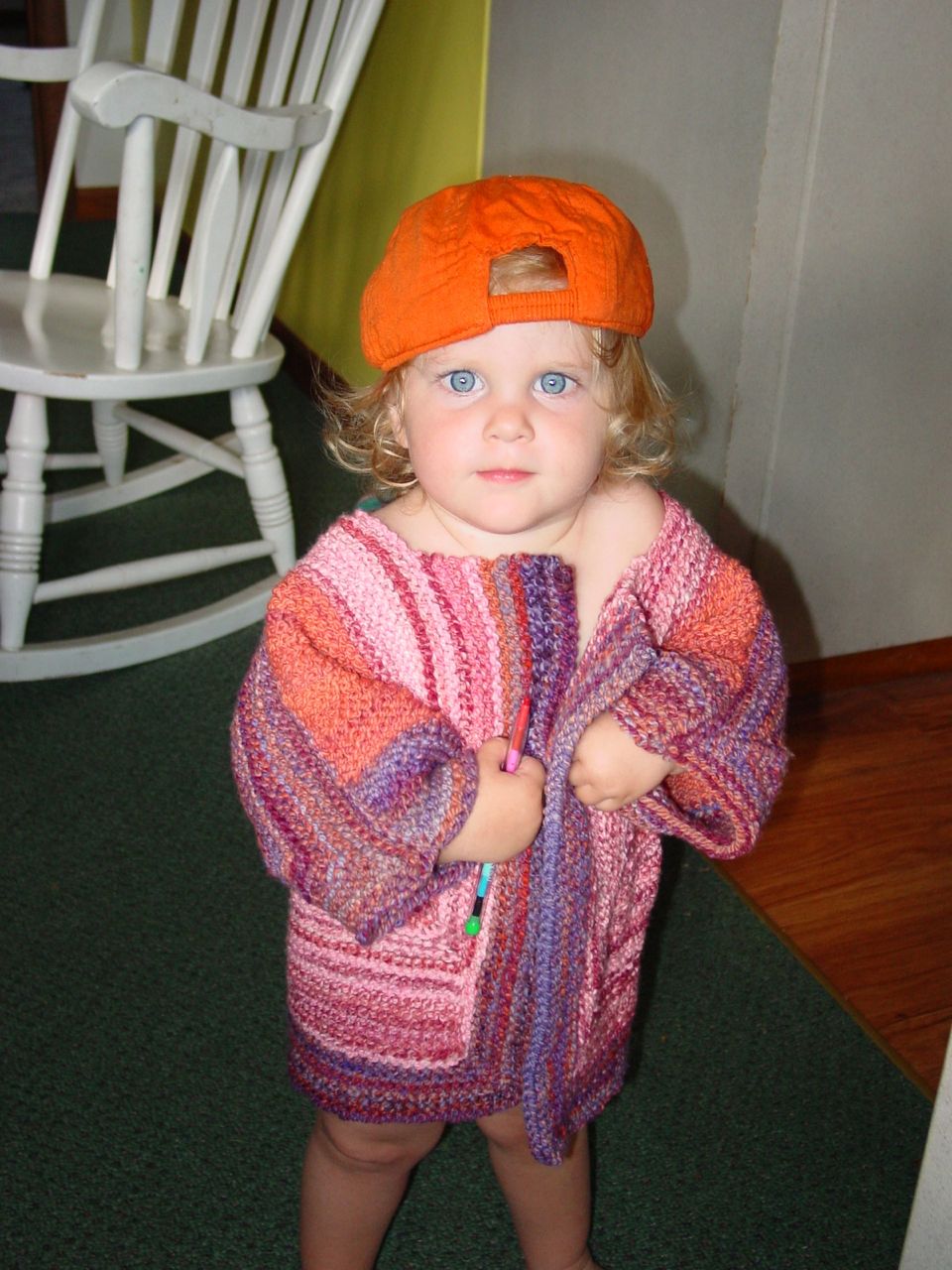 Oh my, this one took seeing my sweet Olive wearing a handspun, handknit sweater to really sink in. Spun out of the softest merino but with lots of singles-twist for (I thought) better wear and then a balancing amount of ply-twist, it was lovely to look at. To look at. When had her put the jacket on, baby, did we both have a surprise! A surprising amount of strength was necessary to get her arms down by her side. I pushed them down and they popped right back up! Look how she has to hold on to the body of the sweater to keep her arms down! I managed to get a couple of shots off before she shed the thick, stiff sweater complaining of ickiness.
Remember when I said it doesn’t always have to be perfectly balanced? if current-jacey-spinner could talk to past-jacey-spinner this is what I’d say – dude, don’t increase your single- twist, increase your ply-twist or your going to have to store that sweater, unworn for the rest of your life and when you die, it’ll get passed down and down and everyone will wonder how you ever ran a spinning magazine because it’ll be the only example of your spinning left since nobody ever wore or touched the sweater more than once, and that, past-jacey-spinner, is not the example of your spinning you want standing the test of time. Also, it’s okay to take off your sweater, especially if it’s hot, they don’t mind.
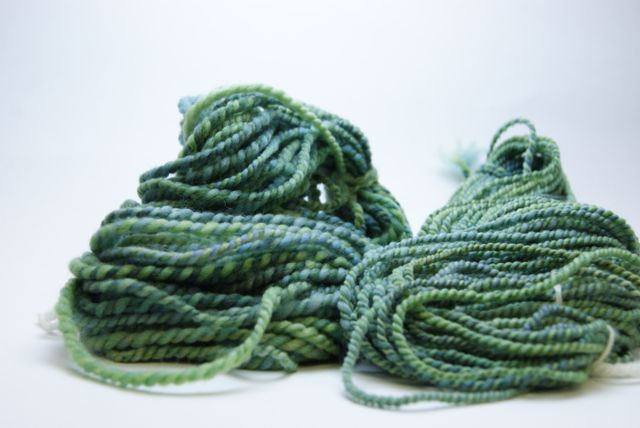
These two yarns, for instance, are the same fiber, the same dye-job, the same ypp! The only difference is that the one on the right has lots of singles-twist and is plied to balance and the one on the left has smaller amount of singles-twist but the same amount of ply-twist as the other! That’s right, the ply-twist amounts are the same. If you could feel these yarns, one would make you swoon while the other would make you avert your eyes and secretly wonder how I manage to fill any class, spinning cord-y yarn like that!
The more plies in a yarn, the less ply-twist it takes to reach balance (I knew this before Patsy Z’s illuminating article, but just barely). Math is cool, right?
So don’t think I hate singles yarns. I love singles yarns! I just love plying too. Theoretically, you could say that singles yarns are about the individual and Plying is about the team. It’s part of the reason I named the magazine PLY. PLYing is about texture and balance and strength and bringing different things together so they can lean and benefit and support. And if, in 10 years time, I wrote another post about plying, I’m sure the things I will have learned since now will be far more than I’ve learned so far. That’s the way of spinning, the more you learn, the father you have to go, and we wouldn’t have it any other way, right?
Spinzilla is a global event where teams and individuals compete in a friendly challenge to see who can spin the most yarn in a week! Spinzilla team registration is open until September 22. The Ply team is full, but there are plenty of teams that still need you! There will be prizes! Click here to register. One hundred percent of your registration fee will go to the NeedleArts Mentoring Program. For more information, see their FAQ page.
* Huh, I’ve never put that together before. The first time I asked a stranger to share their spinning know-how with me, she did. Just like that. I asked, she told. Must have sunk in on some level I didn’t realize because that’s what I’ve been doing ever since. Silly me to have never seen that, thanks, Adrian!


Leave a Reply
Want to join the discussion?Feel free to contribute!